
Ontario Traumatic Brain Injury Lawyers








Tell us briefly what happened and a lawyer will call you back, usually the same business day.
"*" indicates required fields
The transmission or receipt of information through this form does not create a lawyer-client relationship. Please do not send confidential information until a relationship has been established.

The Unseen Injury
A traumatic brain injury is often called the unseen injury. There may be no visible wound, the CT scan may be read as normal, and the person may walk out of the emergency department the same day. Then the changes begin: headaches that do not stop, trouble concentrating and remembering, exhaustion, irritability, a personality that family and friends say is not quite the person they knew. Because the brain is responsible for emotion, personality and every functional ability, an injury to it has consequences no other injury has, and because it is so often missed at the scene and in the trauma bay, where the team is rightly focused on the visible injuries, it is also the injury insurers dispute most. Iacobelli Law Firm has represented brain-injured clients and their families throughout Ontario, and a brain injury case, more than any other, requires legal skill, medical understanding and patience in equal parts.

No two brain injuries are the same, and two similar injuries can have very different outcomes. What they share is that the full impact is rarely known for months or years, that the person injured is frequently the last to recognize it, and that the losses, to work, to relationships, to independence, compound over a lifetime.
From Concussion To Severe Injury
A brain injury is caused by a blow, a jolt or a penetrating injury to the head that disrupts the brain's normal function, and it is graded on scales such as the Glasgow Coma Scale, with the Rancho Los Amigos scale used to describe recovery. A mild traumatic brain injury, a concussion, involves a brief loss or alteration of consciousness; the word "mild" describes the initial presentation, not the outcome, and a substantial minority of people are left with persistent symptoms: headaches, dizziness, nausea, ringing in the ears, difficulty learning new information, impaired memory, judgment, planning and problem solving, poor stress tolerance, depression, and social and emotional difficulty, often with little insight into the change. A moderate injury involves a longer period of unconsciousness and more pronounced cognitive and physical impairment, with a long rehabilitation. A severe injury, with prolonged unconsciousness or coma, produces permanent disability and lifelong care, and where it is visible on imaging the consequences are usually catastrophic: impaired limb function, speech and language difficulty, and profound cognitive change. Anoxic and hypoxic brain injury, from lack of oxygen rather than trauma, arises from surgical and anesthetic errors, birth injury and near-drowning, and is handled with our medical malpractice practice.

Most brain injuries are not visible on CT or MRI. The diagnosis is clinical, made by physicians, neurologists and neuropsychologists from the history, the symptoms and testing, and a normal scan does not mean there is no injury. It means the injury is one the scan cannot see.
How The Injury Shows Itself
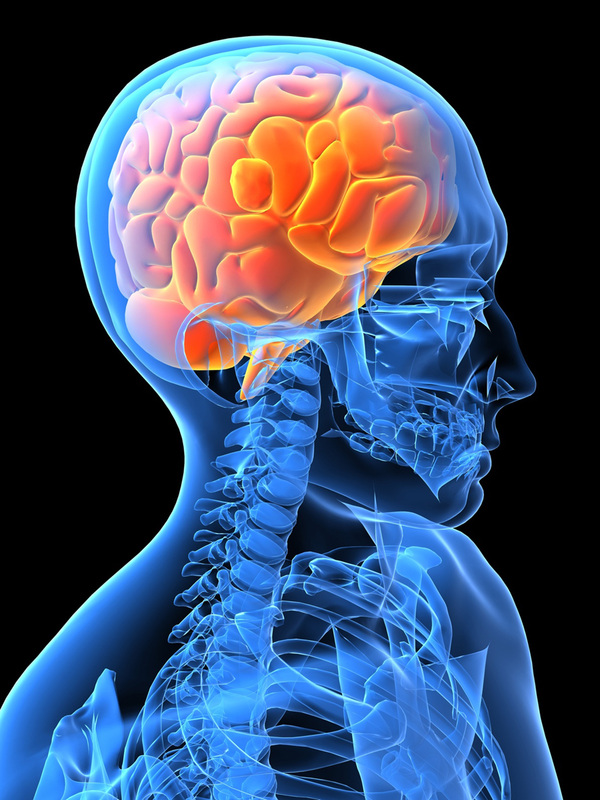
The changes a family notices map onto the part of the brain that was injured. Frontal lobe injury shows as loss of initiative and flexibility, difficulty planning and sequencing everyday tasks, mood swings, changes in personality and social behavior, and trouble expressing language. Temporal lobe injury shows as short-term memory loss, difficulty understanding speech and recognizing faces, and increased aggression. Parietal lobe injury affects reading, writing, arithmetic, naming objects and hand-eye coordination. Occipital injury produces visual field cuts and difficulty recognizing objects and words. Injury to the brain stem and cerebellum affects balance, coordination, swallowing, speech and sleep. In our Ontario practice it is usually family, friends, teachers or co-workers who first notice, and their observations are evidence.
Ontario Brain Injury Lawyers
Traumatic brain injury is responsible for a substantial number of deaths and permanent disabilities in Ontario every year, most of them from motor vehicle collisions, falls, sports and workplace incidents. Iacobelli Law Firm represents brain-injured clients and their families throughout the province from our office in Richmond Hill, and we build every case for the person the client will be in ten, twenty and thirty years, not only for the aftermath.
Catastrophic Impairment And The Benefits It Unlocks
Where the injury was caused by a motor vehicle, the most consequential early step is the application to have it designated a catastrophic impairment under Ontario's Statutory Accident Benefits Schedule. The schedule sets specific criteria for brain injury, tied to the clinical scales and to the person's level of function, and the designation unlocks substantially higher medical, rehabilitation and attendant care limits, up to one million dollars or more depending on the policy, over a far longer period. Insurers contest it as a matter of course, particularly for injuries labeled mild or moderate where the scans are inconclusive, and the dispute is decided at the Licence Appeal Tribunal on medical evidence. We know the criteria and we pursue the designation early, because it is what pays for the care while the larger claim proceeds.
Proving An Injury The Scan Cannot See
We act quickly to preserve the evidence of the accident, and we connect the client with neurologists, neuropsychologists and other specialists who can diagnose the injury properly and provide the expert reports the claim requires. Neuropsychological testing, the observations of family and colleagues, employment and school records from before and after, and the treating team's notes together prove what a scan cannot. Insurers dispute the severity of mild and moderate injuries relentlessly, and the answer is a medical record built with that dispute in mind from the first month.
What Compensation Covers In Ontario
The financial toll of a brain injury extends far beyond the hospital. Working with life care planners, occupational therapists and economists, we build a complete picture of lifelong need: attendant care and personal support, up to twenty-four hours a day for severe injury; rehabilitation therapies, including physiotherapy, speech-language pathology, occupational therapy and psychological counseling; future medical care, medication and equipment; vocational retraining or the loss of a career and its income; home safety modifications; and damages for pain, suffering and the loss of relationships, including claims for family members under the Family Law Act. The tort claim against the party at fault recovers what accident benefits do not, subject to Ontario's threshold and deductible rules for motor vehicle claims, which a serious brain injury clears.
Time Limits And Capacity
Under the Limitations Act, 2002, a lawsuit generally has to be started within two years, and the accident benefits application has notice requirements measured in days. Where the injured person lacks the capacity to manage the claim, it is brought through a litigation guardian, usually a spouse or parent, and the limitation period is suspended while they lack capacity; nothing else in the claim benefits from waiting.
Ontario Brain Injury Resources
Families looking for support beyond the legal claim can turn to the Ontario Brain Injury Association and its local associations, including the Brain Injury Association of York Region and the Head Injury Association of Niagara, to Community Head Injury Rehabilitation Services in Toronto, and to the Toronto Acquired Brain Injury Network. We work alongside these organizations and refer clients to them.
Free Consultation With A Brain Injury Lawyer
If you or a loved one has suffered a brain injury, or you are noticing changes in memory, personality or behavior after a blow to the head, contact Iacobelli Law Firm for a free, no-obligation consultation, by phone, video, in person, or at the hospital or rehabilitation center. There is no fee unless we win your case. Call 416-900-1070 in Ontario, or use the form on this page.
Brain Injury Questions We Hear First
The Hospital Said The CT Scan Was Normal. Do We Still Have A Case?
Yes. Many serious, life-altering brain injuries, including concussions and diffuse axonal injuries, do not show on standard CT or MRI. The diagnosis is clinical, made by specialists we arrange.
My Family Member Seems Different, More Irritable And Forgetful. Is That The Injury?
Yes. Personality change, memory loss and emotional dysregulation are hallmark symptoms of a brain injury. It is not a character flaw; it is the injury, and we make sure insurers and courts understand that.
How Can We Afford The Care That Is Needed Now?
Once the claim is established we work immediately to secure accident benefits to pay for treatment, and where the injury is catastrophic, to secure the designation that raises the limits. The lawsuit itself is on a contingency fee: no fee unless we win.
Can A Concussion Really Be Worth A Claim?
If it has not resolved, yes. In Ontario, persistent post-concussion symptoms end careers and relationships, and the claim is measured by the loss, not by the word "mild."
Ontario Resources
Official sources for the steps that come first. They open in a new tab, so this page and our number stay open.



Your lawyer
Andrew A. Iacobelli
Founding Lawyer
Licensed in Ontario, Florida, Texas and Michigan
Read Andrew’s bio →



