
Ontario Fracture And Orthopedic Injury Lawyers









Tell us briefly what happened and a lawyer will call you back, usually the same business day.
"*" indicates required fields
The transmission or receipt of information through this form does not create a lawyer-client relationship. Please do not send confidential information until a relationship has been established.
A Broken Bone Is Rarely A Simple Injury
Injuries to bones, joints and the structures that support them, muscle, cartilage, ligament and tendon, are the most common serious injuries from car, motorcycle, pedestrian and bicycle collisions and from slips, trips and falls. A bone breaks when the force applied to it is greater than the bone can bear, and the fractures that reach us are the ones that needed surgery: open reduction and internal fixation with plates, screws, rods and other hardware, often more than once. Recovery is long, complications are common, including infection, nerve and blood vessel damage, non-union and post-traumatic arthritis years later, and the consequences reach into every part of a life: the ability to earn an income, to maintain a home, to care for children, to play the sports and do the things that made life worth living. Those consequences are what the claim compensates.

The Fractures We See Most
Ankle fractures. The trimalleolar fracture, which breaks all three parts of the ankle, the lateral malleolus at the bottom of the fibula, the medial malleolus of the tibia and the posterior malleolus, is among the most serious ankle injuries, requires surgery and is frequently complicated by infection, nerve damage and arthritis. Bimalleolar fractures, distal and proximal fibular fractures and tibial shaft fractures follow the same pattern.

Tibial plateau fractures. The tibial plateau is the load-bearing top of the shin bone at the knee. A fracture there affects knee alignment, stability and motion, is usually treated surgically by an orthopedic surgeon, and even with early and aggressive treatment often results in permanent disability and post-traumatic arthritis years later.
Compound and comminuted fractures. An open, or compound, fracture breaks the skin, carries a high risk of infection and is treated with surgery to clean and stabilize the site. A comminuted fracture shatters the bone into several pieces and requires extensive reconstruction. Both result from high-energy trauma, which is to say from collisions.
Spinal compression fractures. A vertebral body compressed to a smaller height by a fall from height, a rollover or a high-impact collision, sometimes with injury to the spinal cord or nerve roots. Spinal cord injuries are covered on their own page.
Hip, pelvic and femur fractures. The injuries of pedestrians, cyclists and the elderly, and the ones most likely to end independent living.
Skull, rib, sternal, shoulder, arm, wrist, hand, knee and foot fractures, and the joint injuries that go with them: rotator cuff, labral, ACL, MCL, PCL and meniscal tears, acetabular and intertrochanteric fractures, and osteomyelitis and necrosis that follow a bad break.
How the force is applied often decides which bone breaks. In a collision, a driver's chest can strike the steering wheel or dashboard, or be caught by the seatbelt, and fracture the sternum, which makes breathing difficult and painful and can injure the heart and lungs beneath it. The driver's right foot, braced on the pedals, can be jammed and fractured. A hard blow to the front of the knee breaks the kneecap. Pelvic fractures, through the hip bone, sacrum or coccyx, come most often from falls, car crashes and bicycle collisions. A cervical fracture is what most people call a broken neck. We also see elbow, humerus and spiral fractures, and the rotator cuff injuries that come with a shoulder fracture, including subscapularis and supraspinatus tears.
Age matters as well. Children's bones break more easily than adults', although their fractures tend to be less complicated. In older people, bones can be brittle and break more seriously from the same impact.
Why The Type Of Fracture Matters To The Claim
In Ontario courts, as everywhere, the type of fracture shapes the claim. An undisplaced hairline fracture is treated with a cast and heals. A displaced fracture, where the broken ends separate, needs reduction and often hardware. An intra-articular fracture into a joint means arthritis later. A pathological fracture through bone weakened by disease raises the question of what the collision actually caused. Insurers know these distinctions and argue every one of them: that the injury was minor, that it has healed, that the arthritis is age. The claim is built on the orthopedic record, the surgical reports, the imaging and the surgeon's prognosis, and where the effects are permanent, on expert evidence of what the injury will cost over a lifetime.

Ontario Fracture And Orthopedic Injury Lawyers
Iacobelli Law Firm represents people with serious orthopedic injuries throughout Ontario from our office in Richmond Hill, and Andrew A. Iacobelli has represented injury victims with trimalleolar and other ankle fractures, tibial plateau fractures, compound fractures, spinal compression fractures and the full range of fractures and joint injuries. Where the injury came from a motor vehicle, Ontario's two-track system applies; where it came from a fall on someone else's property, the Occupiers' Liability Act and its notice rules apply.

Fractures From Motor Vehicle Collisions
Statutory accident benefits pay for treatment, rehabilitation, attendant care and income replacement regardless of fault, and a serious fracture requiring surgery is rarely a "minor injury" under the schedule, whatever the insurer's first letter says. The tort claim against the at-fault driver recovers pain and suffering, future care, lost earning capacity and the family's losses, subject to Ontario's threshold, which a fracture with permanent, serious effects on an important function clears.
Fractures From Falls
Hip, wrist and ankle fractures from a fall on ice, a wet floor or a defective stair are claimed against the occupier under the Occupiers' Liability Act, and the notice rules are the shortest in personal injury law: ten days for a fall on municipal property, sixty days for a fall on snow or ice on private property. Give the notice; we prepare it free.
What Compensation Covers In Ontario
Pain and suffering, including the permanent restrictions and the arthritis to come; the cost of surgery, hardware removal, physiotherapy and future care not covered by OHIP; lost income and, where the injury ends a physical career, the loss of earning capacity; housekeeping and home maintenance; and the family's losses under the Family Law Act. The prognosis for arthritis and future surgery is where an orthopedic expert's opinion adds the most.
How Long You Have In Ontario
Under the Limitations Act, 2002, a lawsuit generally has to be started within two years, the accident benefits application has notice requirements measured in days, and the occupiers' notice rules are shorter still.
Free Consultation With An Orthopedic Injury Lawyer
If you or someone you know has suffered a fractured bone or serious orthopedic injury in an accident, contact Iacobelli Law Firm for a free consultation. There is no obligation, and there is no fee unless we win your case. Call 416-900-1070 in Ontario, or use the form on this page.
Fracture Questions We Hear First
The Bone Has Healed. Is There Still A Claim?
Usually yes. In Ontario a healed fracture with hardware, restricted motion, pain and the prospect of arthritis has lasting effects, and those effects are what the claim measures, not the x-ray.
The Insurer Says My Broken Wrist Is A Minor Injury.
A fracture is not a sprain, and a fracture requiring surgery is not a minor injury under Ontario's schedule. The classification is disputed with the surgical record.
I Am Older And The Insurer Blames Osteoporosis.
The law compensates a collision or a fall that broke a bone that would not otherwise have broken that day. Age makes the injury worse; it does not excuse the person who caused it.
What Does It Cost?
Nothing up front. We work on a contingency fee: no fee unless we win your case.
Ontario Resources
Official sources for the steps that come first. They open in a new tab, so this page and our number stay open.


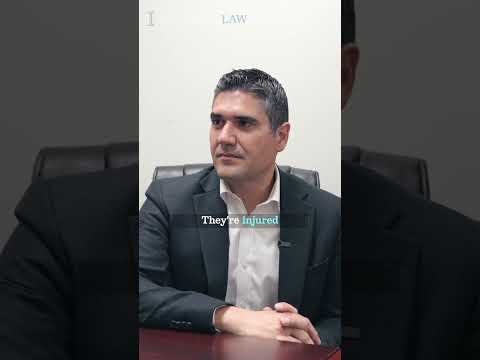

Your lawyer
Andrew A. Iacobelli
Founding Lawyer
Licensed in Ontario, Florida, Texas and Michigan
Read Andrew’s bio →



