
Ontario Wrongful Death Lawyers









Tell us briefly what happened and a lawyer will call you back, usually the same business day.
"*" indicates required fields
The transmission or receipt of information through this form does not create a lawyer-client relationship. Please do not send confidential information until a relationship has been established.

Losing Someone To Negligence
The loss of a loved one is never easy. It is harder still to accept when the death was not only tragic and unexpected but preventable, caused by the carelessness of another person or a company. A wrongful death claim will not undo that. What it can do is hold the responsible party to account, replace the financial support the family has lost, and compensate, as far as money can, for the loss of the guidance, care and companionship of the person who died. Those are real things, and the families we represent are entitled to them.
We recognize that a family in this position has a great many questions and very little energy for a legal process. Our firm offers every prospective client a free, confidential case review, without any obligation to retain us, because you deserve answers early and without a bill attached. We have acted as lead counsel for families in some of the most significant fatal accident claims in Ontario, and we bring the same care to a single-family claim after a car crash.
What A Wrongful Death Claim Is, And Is Not
Under Ontario law, a wrongful death claim is a civil case for damages, brought on behalf of certain family members and the estate of the person who died. It does not assign criminal responsibility, and it proceeds whether or not anyone was charged; a driver acquitted of a criminal offense can still be found liable in a civil claim, because the standard of proof is different. The claim has two parts that run together. The family members' claim compensates their own losses: the support they would have received, the expenses they have paid, and the loss of the relationship. The estate's claim, sometimes called a survival action, compensates the losses the deceased person suffered before death and the losses to the estate itself.

Wrongful death settlements and verdicts are almost always paid by an insurance policy. Most drivers, businesses, property owners and professionals carry liability insurance for exactly this event, and in our experience every wrongful death claim we have handled has been paid by an insurer, not by the individual. That is worth knowing, because families often hesitate to bring a claim against a person. The claim is against a policy.
The Accidents That Lead To Fatal Claims
Most of the wrongful death claims we see in Ontario arise from fatal motor vehicle collisions: fatal car accidents, truck accidents, motorcycle accidents and pedestrian accidents. The rest come from the same negligence that causes serious injury: medical malpractice, unsafe premises, defective products, nursing home neglect, workplace incidents and, less commonly, a fall or an injury on commercial or public property. Whatever the cause, the grounds are the same as any other negligence claim: a duty of care, a breach of it, and a death that resulted. Proving that requires the same evidence, gathered on the same short timeline, as a serious injury case, and the family is rarely in a position to gather it. That is what we do in the first weeks.
Ontario Wrongful Death Lawyers
In Ontario, when someone dies as a result of the actions or negligence of another person or company, the surviving family members can pursue a claim for wrongful death, and the estate has an independent claim of its own. Iacobelli Law Firm represents families throughout the province from our office in Richmond Hill, and our lawyers work on their behalf to obtain justice for their loss. Consultations are always free, confidential and without obligation.
Who Can Bring A Claim In Ontario
The family's right to claim is created by statute. Part V of the Family Law Act gives specific relatives the right to compensation for the financial losses and the loss of companionship resulting from a death caused by negligence. The relatives who can claim are the spouse, children, grandchildren, parents, grandparents, brothers and sisters of the person who died. A common-law partner is treated as a spouse for this purpose. The estate's claim is brought by the estate trustee under the Trustee Act and covers the losses the deceased suffered before death and the expenses the estate incurred.
What An Ontario Family Can Recover
Family members can recover the expenses they have actually incurred for the benefit of the deceased, including funeral and burial expenses and travel to visit during treatment; the value of nursing, housekeeping and other services they provided; the financial support they have lost and would have received; and an amount to compensate for the loss of the guidance, care and companionship they could reasonably have expected to receive had the death not occurred. Where the death followed a period of injury, the estate may recover the deceased's own losses for that period. Where the death was caused by a motor vehicle, Ontario's accident benefits also provide a death benefit and funeral expenses through the auto insurer regardless of fault, and that claim has its own notice requirements.
The Two-Year Deadline, And Why It Is Shorter Than It Sounds
The Limitations Act, 2002 governs the time for filing a wrongful death claim in Ontario. The basic limitation period is two years, with some exceptions, and it applies to the actual filing of the claim in court. That is the outer limit, not the plan. Evidence has to be preserved, the police and coroner's material has to be obtained, witnesses have to be found and the defendants and their insurers have to be identified, and all of that has to happen before a claim can be prepared. Waiting too long makes it difficult for any lawyer to build the case within the period.
Fatal Accident Claims We Have Led
Our firm has been lead counsel on behalf of victims in major wrongful death claims in Ontario, including the fatalities in the Downsview Park stage collapse and the Toronto Community Housing fire. Those cases involved multiple defendants, engineering and fire-safety evidence, and years of litigation, and they are the reason families and other lawyers refer fatal claims to us. Most of the fatal claims we handle are far quieter than that: a family after a highway collision, a fall, a delayed diagnosis. They receive the same work.
How A Family's Financial Loss Is Calculated In Ontario
The damages in a wrongful death claim fall into two groups. The financial, or pecuniary, losses are the support the family would have received from the person who died and the household services they provided. The non-financial losses are the family's loss of guidance, care and companionship and, through the estate's claim, the pain and suffering of the person who died. No two claims are assessed the same way, because the figures depend on how the family actually lived.
Loss of financial support. The starting point is what the person who died would have earned to retirement, and the question is how much of it would have gone to the family. How that share is worked out depends on the household. In a single-income family, the surviving spouse's dependency is measured as a share of the deceased's income. Where both spouses worked and pooled their income for family expenses, the calculation looks at the joint income the deceased contributed to, less the survivor's own income. Where pooling does not fit, for example when the survivor earned more than the deceased, a modified approach based on the deceased's net income is used. The family's actual spending can be used instead of standard percentages, but that means tracing where the money went, which is rarely simple.
Children. Each child's loss of support is an additional share of the deceased's income, running to the age at which the child would no longer have depended on the parent. That age turns on the child's circumstances, including how long they would have stayed in school.
Loss of household services. The work the deceased did around the home, cooking, cleaning, grocery shopping, gardening, maintenance and repairs, has a value the family can claim. It is usually calculated from the hours each week the deceased spent on that work, multiplied by the hourly cost of hiring someone to do it, and projected over the deceased's life expectancy.
Free, Confidential Consultation
If you have lost a loved one because of the negligence of another person or company, contact Iacobelli Law Firm to speak with a wrongful death lawyer. The consultation is free and confidential, by phone, video or in person, and there is no obligation. There is no fee unless we win your case. Call 416-900-1070 in Ontario, or use the form on this page and a lawyer will call you back.
Wrongful Death Questions We Hear First
The Driver Was Charged. Do We Still Need A Civil Claim?
Yes. A criminal case punishes the offender; it does not compensate the family. The civil claim is the only route to the financial support and the damages the family is entitled to, and it proceeds whatever the criminal outcome.
Can We Claim If Our Relative Was Partly At Fault?
In Ontario, yes. The recovery may be reduced in proportion to the deceased's share of responsibility, but it is not barred.
Who Brings The Claim?
In Ontario, the family members bring their own claims and the estate trustee brings the estate's, and they are usually filed together. We coordinate all of it.
What Does It Cost?
Nothing up front. We work on a contingency fee: no fee unless we win your case, and we explain exactly how it works before you decide anything.
Ontario Resources
Official sources for the steps that come first. They open in a new tab, so this page and our number stay open.


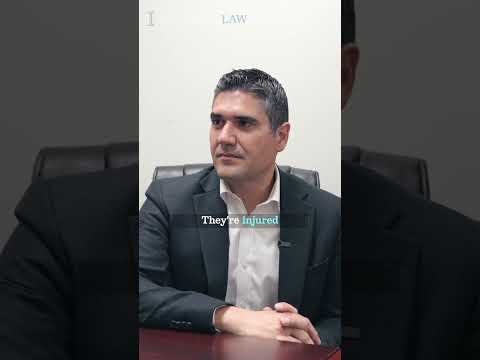

Your lawyer
Andrew A. Iacobelli
Founding Lawyer
Licensed in Ontario, Florida, Texas and Michigan
Read Andrew’s bio →



