Florida Motorcycle Accident Lawyers









Tell us briefly what happened and a lawyer will call you back, usually the same business day.
"*" indicates required fields
The transmission or receipt of information through this form does not create a lawyer-client relationship. Please do not send confidential information until a relationship has been established.
Florida Motorcycle Accident Claims Are Not Car Claims
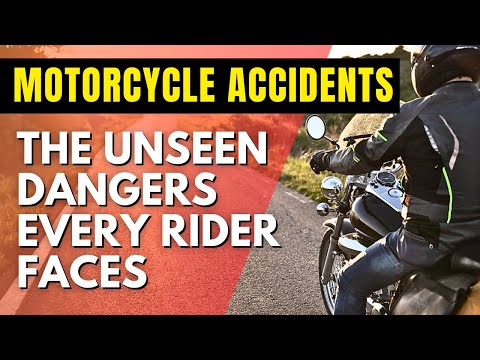
A rider has no roof, no airbag and no crumple zone. When a car hits a motorcycle, the rider takes the crash, and the injuries we see are the serious ones, from broken bones to brain injury, paralysis and death. What makes so many of these cases hard to accept is how they start. Very often, another driver simply did not notice the motorcycle.

The claim works differently as well. A motorcycle case has its own evidence, its own defenses and its own way of being valued, and insurers test every one of Florida's injury rules against the rider. Those general rules are explained on our Florida injury law page. This page is about what changes when you were on two wheels.
How Florida Motorcycle Crashes Actually Happen
Stereotypes say riders cause their own crashes. The crashes we investigate say otherwise. Most are caused by the negligence of another driver, and the same patterns show up across Florida.
A driver turns left across the path of an oncoming motorcycle. A driver changes lanes into the rider, sideswipes the bike or cuts it off. A driver fails to see the motorcycle at all. A driver is speeding. A large share of the fatal crashes happen on I-95, I-75 and the state highways.
None of those crashes require the rider to do anything wrong. The evidence usually shows it, too, if someone collects it: the angle of impact, the damage to the bike, the driver's own account at the scene, and witnesses who saw the turn or the lane change.
The driver mistakes behind those crashes are familiar. A driver changes lanes or turns without checking the mirrors or the blind spot. A driver sees the motorcycle but misjudges its speed and distance, or fails to yield. Distraction and impairment play a part. So does road design: many Florida roads have left-turn lanes that don't give a waiting driver a clear line of sight to oncoming traffic. Most riders ride defensively and position themselves to be seen. The motorcycle was there to be seen.
Speed makes all of it worse. A speeding driver has less time to react to a rider and is more likely to lose control, and the added speed means a harder impact and a more serious injury.
The Defenses Insurers Use Against Florida Riders
Expect the insurer to look at the rider before it looks at its own driver. The arguments are predictable: the motorcycle's design, the rider's speed, lane position, gear and riding habits. Many are baseless. They still work if no one answers them with evidence.
The first move comes quickly. The driver's insurer calls, asks for a recorded statement and offers a quick settlement before the injury has declared itself. For a rider, that recorded statement is where the questions about speed and lane position begin.
In Florida that bias now has a direct price. Since the 2023 reforms, Florida uses a modified comparative negligence rule. A rider found partly at fault recovers a proportionally reduced amount, and a rider found more than fifty percent at fault recovers nothing. An insurer that can shift enough of the blame onto the rider pays nothing at all. That's why the answer has to start in the first week, with the scene, the witnesses, the bike and the gear, before the insurer's version of events hardens.
A Florida Motorcycle Accident Lawyer Who Rides
Andrew A. Iacobelli, a member of The Florida Bar, has ridden motorcycles himself. That matters at the negotiating table. He knows how a rider actually handles a bike in traffic, which makes it easier to see when the insurer's account of the crash doesn't hold up, and it helps level the field against adjusters who are counting on the old stereotypes.
It also changes the conversation with clients. A rider explaining what happened doesn't have to translate it for us.
The Two-Year Deadline After A Florida Motorcycle Crash
In 2023 Florida cut the limitation period for negligence claims in half, from four years to two (Florida Statutes, section 95.11). For a rider recovering from surgery, two years passes quickly, and the evidence that answers the defenses against riders fades much faster than that.
So act now. Get treatment and keep every appointment. Keep the motorcycle as it is, along with the helmet, jacket and anything else damaged in the crash, and photograph all of it. Write down the names of witnesses. Don't give a recorded statement to the driver's insurer, and do not sign anything or accept a payment until a lawyer has reviewed it.
Insurance And Compensation After A Florida Motorcycle Crash
The claim for your injuries is made against the driver who caused the crash, and in practice against that driver's insurer. It can include medical expenses, lost income and future care and, for serious injuries, pain and suffering. When a rider's injuries are catastrophic (a brain or spinal cord injury, an amputation), the claim is built the same way every time: every defendant and every policy identified, a life care plan the defense cannot dismantle, and a case prepared for trial from the start.
The problem is often coverage. Florida does not require drivers to carry bodily injury liability coverage, and a large share of Florida drivers carry none. Uninsured and underinsured motorist coverage, where it was not rejected in writing, is often the only real source of recovery after a serious crash. We look at every policy that might apply as soon as the file opens. If you're ready to talk it through, tell us about the crash.
When A Florida Motorcycle Crash Is Fatal
Motorcyclists are killed on Florida roads in disproportionate numbers. When another driver's negligence caused the crash, the rider's family may bring a wrongful death claim against the person or company responsible. Expect the same defense an injured rider faces: the driver and the insurer will try to blame the motorcycle. An investigation that starts early and preserves the evidence of what the other vehicle did is usually what answers it.
Florida's Wrongful Death Act decides who can recover. The surviving spouse, the children and the parents come first. Other blood relatives, and adoptive brothers and sisters, can recover when they were partly or wholly dependent on the rider for support or services. The claim itself is filed by the personal representative of the rider's estate on behalf of every survivor, and it generally has to be filed within two years of the date of death. Our Florida wrongful death page explains how these claims work and what they can recover.
Florida Motorcycle Accident Questions
The Driver Says They Never Saw Me. Does That Hurt My Claim?
Usually not. Failing to see a motorcycle is one of the most common causes of the crashes we investigate, and a driver who says it is describing what went wrong, not offering an excuse.
Can I Recover If The Insurer Says I Was Partly At Fault?
Yes, as long as you are not found more than fifty percent at fault, and your recovery is reduced by your share. Above fifty percent, Florida law now bars recovery, which is why the evidence has to be gathered early.
How Long Do I Have To File A Motorcycle Accident Claim In Florida?
Two years for a negligence claim since the 2023 reforms. Don't plan around the full two years, because the evidence that answers the defenses against riders has to be secured in the first weeks.
Should I Get My Motorcycle Repaired Right Away?
Not until a lawyer has seen it. The bike, the helmet and the gear are evidence of how the crash happened, so photograph everything and keep it until it has been reviewed.
What Does It Cost To Talk To You?
Nothing. The consultation is free, and we work on a contingency fee: no fee unless we win your case.
Florida Resources
Official sources for the steps that come first. They open in a new tab, so this page and our number stay open.