Cross-Border Injury Lawyers: Canada And The United States









Tell us briefly what happened and a lawyer will call you back, usually the same business day.
"*" indicates required fields
The transmission or receipt of information through this form does not create a lawyer-client relationship. Please do not send confidential information until a relationship has been established.
Why A Cross-Border Injury Claim Is A Different Case
Canadians travel to the United States constantly, for a winter in Florida, a weekend in Michigan, business in Texas, and Americans come north in the same numbers. When one of them is seriously hurt, the claim lands in two countries at once. The injury claim is governed by the law of the place where the accident happened. The injured person's own insurance, health care, employer and family are at home under a different set of rules. Two insurers, two legal systems, two currencies, and, for most people, two law firms that do not talk to each other. The gaps between them are where claims fall apart.
Iacobelli Law Firm was built for this case. Andrew A. Iacobelli is licensed to practice in Ontario, Florida, Texas and Michigan and admitted to the United States District Courts for the Southern, Middle and Northern Districts of Florida and the United States Court of Appeals for the Eleventh Circuit. He is a citizen of both countries, litigated serious injury, wrongful death and insurance bad faith claims in Florida before returning to Ontario, and he wrote the book on the subject: Are You a Canadian Injured in the United States? Claim the Damages and Insurance Coverage the Right Way. Ask and we will send you a copy.
Canadians Injured In The United States
If you are an Ontario resident injured in a crash in the United States, you usually have three claims, not one, and the order in which they are handled decides how much of your loss is ever recovered.

Your Own Accident Benefits
Your Ontario auto policy follows you across the border. Statutory accident benefits, medical and rehabilitation, income replacement, attendant care, are available for a crash in Florida just as they would be for a crash on the 401, and in some states you can elect between Ontario benefits and the benefits of the state where the crash happened. That election is a decision with lasting consequences, and it should be made with advice.
The Claim Against The Driver At Fault
The injury claim itself is brought in the state where the crash happened, under that state's law. Florida's no-fault threshold and 2023 reforms, Texas's proportionate responsibility rule and Michigan's no-fault system all change what can be claimed and by when, and each state's deadline is its own. This is the part of the case that an Ontario-only lawyer cannot run.
Underinsured Motorist Coverage At Home
Most Ontario policies carry a million dollars or more of coverage. Personal policies in the United States are often a fraction of that, commonly well under one hundred thousand dollars and sometimes as low as ten or twenty thousand. When the at-fault driver's policy is exhausted, the OPCF 44R Family Protection endorsement on your own Ontario policy pays the difference, and that claim is brought in Ontario, against your own insurer, under a mix of Ontario law and the law of the state where the crash happened. It is the part of a cross-border claim that is most often mishandled.
The Release Trap
When a U.S. insurer tenders its policy limits it wants a signed release of its driver. Sign it without protecting the underinsured claim and the Ontario claim can be lost: in Kovacevic v. ING Insurance, plaintiffs injured in Florida who settled the U.S. action for less than the available limits and signed a full release were held unable to claim underinsured coverage from their own insurer. Our practice is to put the Ontario insurer on notice of the tendered limits and proposed release and give it at least thirty days to consent or to advance the same amount itself, which preserves everyone's rights. It is routine for us, and it is unfamiliar to most adjusters.
Your Ontario Policy After A U.S. Crash: Who Is Covered And Which Law Applies
Ontario accident benefits reach further than most people expect. If you hold an Ontario auto policy, or are covered under one (as a family member living in the policyholder's household, for example), you can usually claim them for a crash in the United States, and they are paid even if the crash was your fault. If you have disability insurance with a Canadian insurer, that claim is available too.
Which Law Decides The Underinsured Claim
The law of both places, a point adjusters and even their lawyers often get wrong. The claim is brought against your own insurer in an Ontario court, as the policy requires, but the court starts from the rule that the law of the place where the negligence happened governs liability (lex loci delicti). For a crash in Florida, Florida law decides who was at fault. Ontario law decides the damages: the policy says so, Canadian courts treat damages as procedural, and an Ontario court always applies its own procedure.
Ontario's Deductible And Threshold Do Not Apply
This is the consequence that matters most. The deductible and the threshold that Ontario law places on pain and suffering claims are liability rules, so they do not apply to an underinsured claim arising from a crash in the United States. The leading case is the Ontario Court of Appeal's decision in Chomos v. Economical Mutual Insurance Co. (2002); see also Green v. State Farm Mutual Automobile Insurance Co. (2009). If the state where the crash happened has a similar rule of its own, that state rule applies instead, as part of its liability law.
The Deadline For The Underinsured Claim
The underinsured claim has its own limitation period, and when it starts has been argued in the courts. In Schmitz v. Lombard General Insurance Company of Canada, 2014 ONCA 88, the Court of Appeal held that the limitation period for a claim under OPCF 44R starts to run on the day after you make a demand for indemnity on your insurer. We make that demand, and track the deadline that follows it, as part of running the U.S. claim.
In our experience the Ontario insurer almost always consents. If it ignores the notice, we usually conclude the U.S. settlement, where the circumstances warrant it, and sue in Ontario for the underinsured coverage. The insurer cannot have it both ways: it cannot stop a good faith settlement with the at-fault driver unless it is willing to pay you the same amount itself. If it wants to preserve its subrogation right (its right to be repaid by the at-fault driver's insurer), it has to advance the money, which costs it little, since it can recover the same amount from that insurer later.
Americans Injured In Canada
A citizen or resident of the United States injured in Ontario has the same right to compensation as an Ontario resident. In most cases the Ontario court has jurisdiction and Ontario law applies: the two-track system of no-fault accident benefits and a tort claim against the driver at fault, the threshold and deductible for pain and suffering, the two-year limitation period, and the notice rules for claims against a municipality or for a fall on ice and snow. Medical expenses incurred in both countries, lost income, future care and pain and suffering are all claimable. We bring those proceedings for American clients, we work alongside an American lawyer who is already involved, and where the injury happened in another province we refer clients to counsel we know there.

Three guides for Americans hurt in Ontario:
- Americans injured in Ontario: a guide to cross-border injury claims
- How ERISA and Medicare liens affect a Canadian settlement
- The risks of hiring a lawyer licensed only in Ontario
Florida Residents Hit By A Canadian Vehicle
The case runs the other way too. Every winter Florida's roads fill with Ontario and Quebec plates, and Florida residents are injured by drivers who have gone home by the time the claim is made. Locating a defendant in Canada, serving them, and dealing with a Canadian insurer that does not answer to Florida rules are all things this firm does from the Ontario side of the border, for a claim run under Florida law.
Is Your Cross-Border Lawyer Actually Licensed There?
Search for a cross-border injury lawyer and you will find many Ontario firms advertising the service. Most of them hold no license in any U.S. state. Read their wording: they will "coordinate with American attorneys", "work with U.S. counsel", or handle the claim "from Ontario". That means a referral to a lawyer you have never met for the part of your case that is worth the most, or, worse, an Ontario lawyer evaluating a U.S. claim, sending a demand and negotiating with a U.S. adjuster without a license to do so, which is the unauthorized practice of law in that state and a serious offense in Florida. U.S. adjusters know exactly who can file suit against them and who cannot, and they price the claim accordingly. Ontario professional liability insurance generally does not cover errors in foreign law.
Three questions before you sign a retainer for a U.S. accident: Are you licensed by the state bar where my accident happened? Are you admitted to the U.S. federal courts? Will you litigate and negotiate my U.S. case yourself, or refer it out? At Iacobelli Law Firm the answers are yes, yes and ourselves: the firm's U.S. practice runs the U.S. case and the Ontario office runs the Canadian side, under one strategy.
Where The Injury Happened
Florida
Home ground. Andrew practiced in Palm Beach County before founding the firm, and Canadians injured on I-95, in a Publix or on the Intracoastal are the largest share of the firm's cross-border work. Florida's fourteen-day treatment rule for PIP, its permanency threshold and its two-year deadline all apply. Our Florida page explains the system.
Texas
Texas is a fault state with a proportionate responsibility rule that ends a claim at fifty-one percent and a two-year deadline. Andrew is admitted to the State Bar of Texas. Our Texas page explains the claim.
Michigan
Michigan is the state most Ontarians cross into, and its no-fault system, with unlimited or capped medical benefits depending on the policy and a threshold for suing the driver, is unlike Florida's. Andrew is admitted to the State Bar of Michigan and handles Michigan claims for Ontario residents.
Elsewhere In The United States
For a crash in a state where the firm is not admitted, the Ontario side of the claim, the benefits, the election and the underinsured claim, is handled here, and the state claim is run with counsel in that state whom we know and instruct. Many of those lawyers send us their Canadian clients for the same reason.
How We Run A Cross-Border Case
The first call establishes where the crash happened, which policies respond and which deadlines are already running. We then coordinate every insurer, the U.S. liability carrier, the Ontario accident benefits insurer, the OPCF 44R carrier, a health plan or OHIP with a subrogated interest, so that no coverage is missed and no release is signed that forfeits another claim. We protect the recovery against subrogation and reimbursement claims, which can otherwise consume a settlement. And we prepare the case for trial in the court where it belongs, because that is what moves an insurer in either country.

Motorcyclists
Riders are over-represented in cross-border claims and under-served by them: a Canadian rider hit by a left-turning car in Daytona faces the same three claims as a driver, with lower U.S. policy limits and more serious injuries. The firm's founder rides, and the motorcycle accident page explains what changes for a rider.
Injured On The Other Side Of The Border? Start Here
Call the office nearest you, 416-900-1070 in Ontario or 561-625-6133 in Florida, or use the firm's cross-border line, 1-866-234-6093, from either country. Send us what happened using the form on this page and a lawyer licensed on both sides of the border will call you back. The first conversation is free, and there is no fee unless we win your case. We welcome calls from other lawyers.
Cross-Border Questions We Hear First
I Am From Ontario And Was Rear-Ended In Florida. Do I Claim In Florida Or At Home?
Both. The claim against the driver is a Florida claim under Florida law. Your accident benefits and, if the driver's policy is too small, your underinsured coverage are Ontario claims against your own insurer. They have to be run together.
The U.S. Insurer Has Offered Its Policy Limits And Wants Me To Sign A Release. Should I?
Not before the underinsured claim at home is protected. Signing first can forfeit it. Call us before you sign anything.
I Am American And Was Hurt In Toronto. Can I Sue In Ontario?
Yes. Ontario law applies and the Ontario court has jurisdiction. We bring those claims for U.S. residents and work with your lawyer at home if you have one.
My Ontario Lawyer Says They Can Handle My Florida Claim From Toronto.
Ask whether they are licensed by The Florida Bar. If not, they cannot legally negotiate or litigate it, and the adjuster knows that.
What Does It Cost?
Nothing up front. We work on a contingency fee: no fee unless we win your case.
Videos


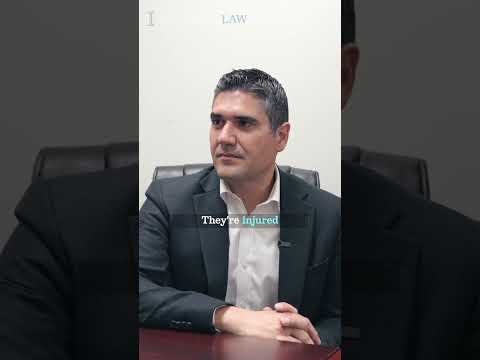

Your injury lawyer
Andrew A. Iacobelli
Founding Lawyer
Licensed in Ontario, Florida, Texas and Michigan
Read Andrew’s bio →Personal Injury Claims We Take Across The Border
Help For Injured People And Their Families