Texas Wrongful Death Lawyers









Tell us briefly what happened and a lawyer will call you back, usually the same business day.
"*" indicates required fields
The transmission or receipt of information through this form does not create a lawyer-client relationship. Please do not send confidential information until a relationship has been established.

What A Texas Wrongful Death Claim Is
When negligence causes a death in Texas, the law allows two related claims. Under the Texas Wrongful Death Act, the surviving spouse, children and parents can claim for their own loss. A separate survival claim lets the estate recover the losses the person who died suffered before death. We look at both from the first conversation.
None of this is easy to think about while you are grieving. Many families who call us aren't ready to talk about a lawsuit at all. They want to know what happened, and whether anyone will be held responsible. Those are the right first questions, and the legal claim is often how the answers get found.
Who Can Bring A Wrongful Death Claim In Texas
The Texas Wrongful Death Act gives the claim to the surviving spouse, the children and the parents of the person who died. Each of them claims for their own loss. The survival claim is different: it belongs to the estate, and it recovers what the person who died lost before their death.
In practice, one death can leave several people with a claim, and their losses are not the same. A spouse lost a partner and, often, a household income. A parent lost a child. Grown children lost a parent they still relied on. Part of our job is making sure each person's loss is presented on its own terms rather than folded into one number.
If you are not sure where you fit, ask. It's one of the first things we sort out.
What A Family Can Recover In Texas
Between the wrongful death claim and the survival claim, a Texas family can pursue funeral costs, the financial support the person would have provided, the loss of their companionship, and the losses the person suffered between the injury and death. Texas applies its own rules on the damages available, and some defendants come with special limits.
Two of those limits come up often. Claims against a city, county or the state fall under the Texas Tort Claims Act, which caps what can be recovered. Health care liability claims, which include claims against nursing homes, are subject to limits on non-economic damages. Both change how a claim has to be valued and built.
We won't put a number on a family's loss in a first phone call, and nobody should. What we do early is identify every defendant and every insurance policy, because what a family can recover depends heavily on who is responsible and how they are insured.
Fault And Deadlines In A Texas Wrongful Death Case
The limitation period for a Texas wrongful death claim is generally two years from the death. That is the outer limit. Claims against a city, county or the state need formal notice within six months under the Texas Tort Claims Act, some city charters require it sooner, and health care liability claims have their own pre-suit notice and an expert report deadline.
Fault matters too. Texas apportions responsibility among everyone involved, and the defense in a death case will often try to assign some of it to the person who died: they were speeding, they crossed mid-block, they weren't wearing a helmet. Under Texas proportionate responsibility, a share of fault reduces the recovery, and a share above fifty percent ends it.
The person who died can't tell their side. The evidence has to, which is why we start gathering it right away.
Fatal Crashes, Drunk Drivers And Deaths In Medical Care
Wrongful death claims in Texas come out of car and truck crashes, drunk driving, dangerous property, medical care and nursing homes. Each kind is built on different evidence and, sometimes, different rules. A few examples show how much the cause of death shapes the claim from the first week.
When an 18-wheeler is involved, the carrier's electronic logs, engine data and dispatch records are the evidence, and federal hours-of-service and maintenance rules apply to the carrier. A preservation demand has to go out in the first days, before those records disappear.
When a drunk driver caused the crash, Texas dram shop law allows a claim against a bar or restaurant that served a patron who was obviously intoxicated and presented a clear danger. That can bring in a second defendant, with its own coverage.
When the death followed medical or nursing home care, the claim is a health care liability claim. It needs an expert report early in the case and has its own notice requirement before suit is filed. Those steps take time to do properly. One more reason not to wait.
How We Work With Grieving Families
Andrew A. Iacobelli, an attorney admitted to the State Bar of Texas, leads our Texas practice. He spent years defending injury claims for insurers before founding the firm, so he knows what a family is likely to hear from the other side, and when. When you call, you speak with a lawyer, not an intake service.
Expect the insurer for the responsible party to call quickly. It may ask a family member for a recorded statement or offer an early payment. Don't give the statement, and don't sign or accept anything until a lawyer has reviewed it.
We meet families where they are: by phone or video first, in person by arrangement, and including relatives who live far from where the death happened. Most of our Texas clients are in Dallas-Fort Worth and the Houston region, including The Woodlands, and we represent families across the state, including Austin, San Antonio and El Paso. Our Texas practice page explains how a Texas claim runs more generally, and you can reach us here when you are ready.
Texas Wrongful Death Questions
How Long Does A Family Have To File A Wrongful Death Claim In Texas?
Generally two years from the date of death, but if a city, county or state entity is involved, formal notice is due within six months and some city charters set an earlier date, so a family that suspects a government role should call quickly.
What If Our Loved One Was Partly At Fault?
The claim can still go forward: Texas reduces the recovery by the percentage of fault assigned to the person who died and bars it if that share is found to be more than fifty percent, which is why the facts of the crash or the care are investigated from the start.
The Insurance Company Has Offered A Settlement. Should We Accept It?
Not until a lawyer has reviewed it, because an early offer comes before anyone has measured what the family and the estate have actually lost, so don't sign anything or accept a payment first.
Do We Need To Travel To Meet With You?
No. The first consultation is free and happens by phone or video wherever you are, and we meet in person by arrangement, including at the hospital if that is where the family is.
Texas Resources
Official sources for the steps that come first. They open in a new tab, so this page and our number stay open.


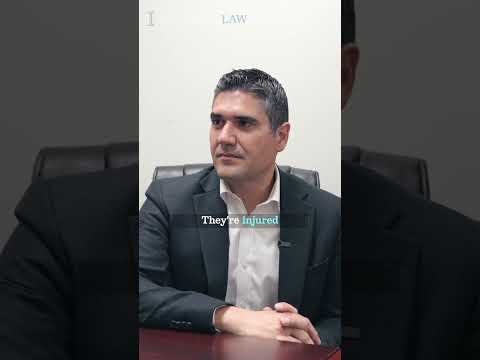

Your attorney
Andrew A. Iacobelli
Founding Lawyer
Admitted to the State Bar of Texas
Read Andrew’s bio →